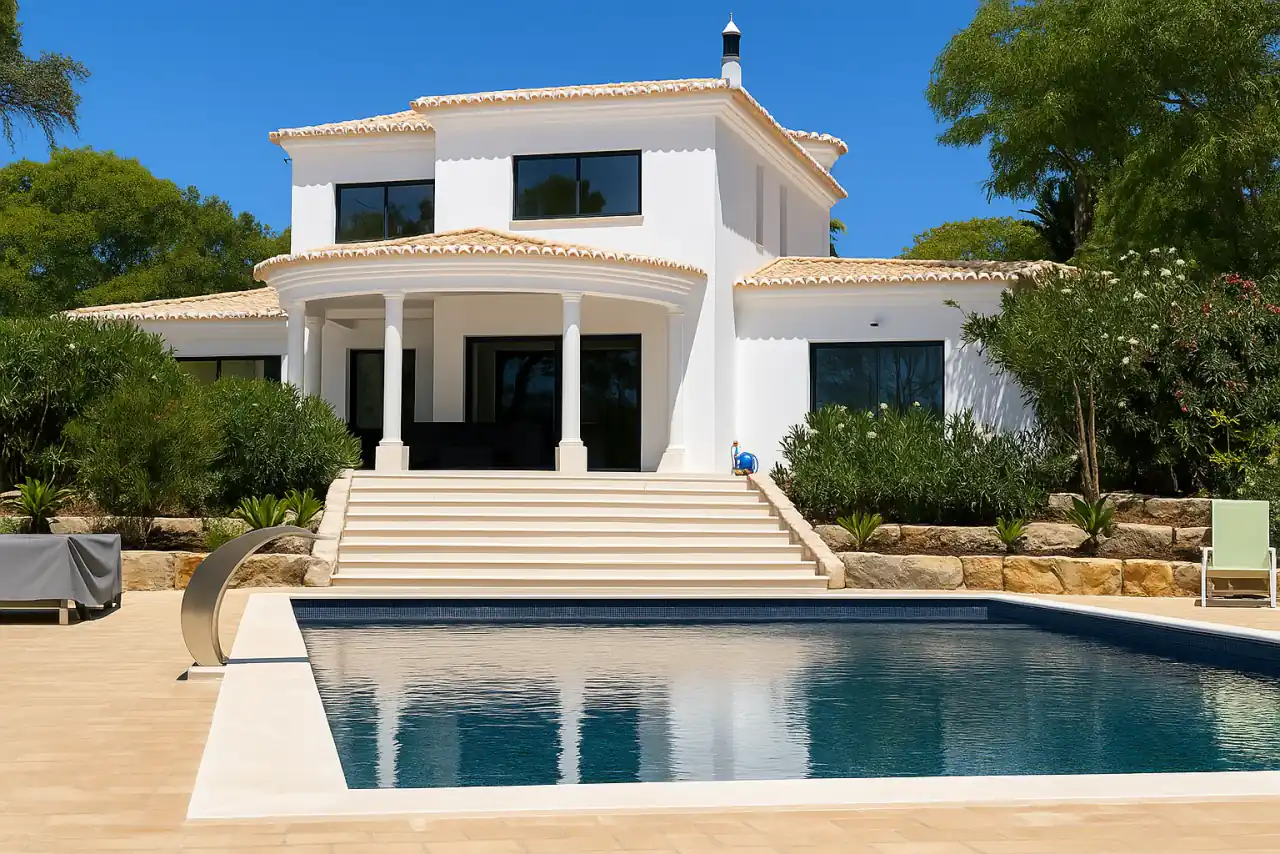
Painting & Insulation in the Algarve
We protect your home from the Algarve sun and sea air: façade painting, ETICS external insulation and waterproofing of flat roofs and terraces.
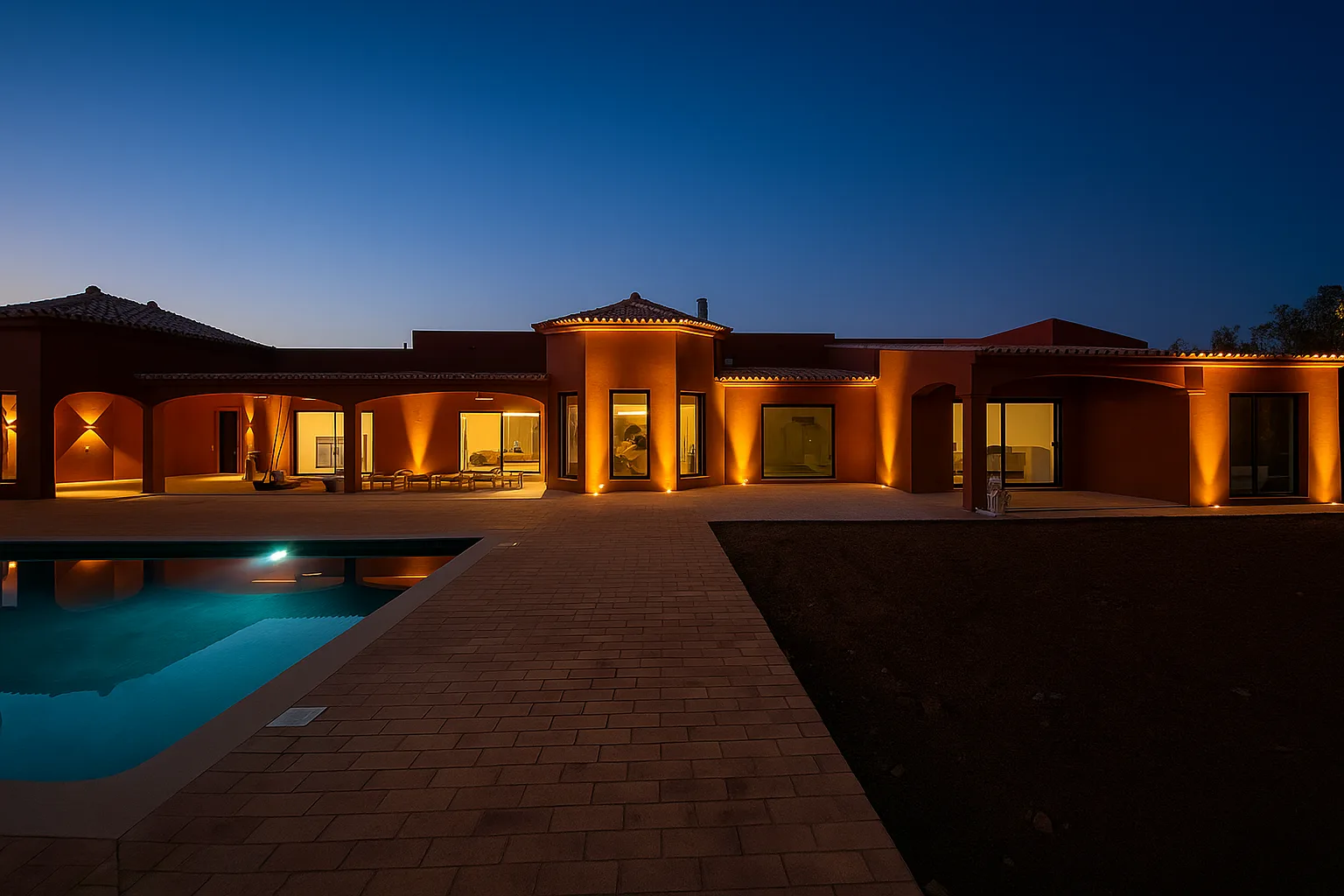
Façade Painting
Surface preparation, crack repair and painting with coatings made for coastal conditions.
External Wall Insulation (ETICS)
Thermal cladding that keeps summer heat out and winter warmth in, with real energy savings.
Terrace Waterproofing
Membranes and liquid systems for flat roofs, terraces and balconies, with guarantee.
Interior Painting
Clean, fast interior redecoration, including damp and mould treatment.
What does painting and insulation work include?
This service looks after the building envelope: the walls, terraces and roofs that stand between the inside of the house and the Algarve sun, wind and sea air. Done well, it keeps water out and cuts summer heat.
If the walls themselves are stone or taipa with structural cracks, start with rehabilitation; if you want to change kitchens, bathrooms or the layout, see renovation. We carry out:
- Façade repair and painting: cracked render, flaking paint, exposed steel on balconies
- ETICS external thermal insulation (known locally as capoto)
- Waterproofing of flat roofs, terraces and balconies
- Interior painting, including damp and mould treatment
- Parapets, wall copings and rainwater outlets
How does a painting or insulation job work, step by step?
Before painting or insulating, you need to know where the water and the heat are getting in. That is why every job starts with a diagnosis.
Free site visit to inspect façades, terraces and any damp inside
Diagnosis: where water gets in, how the render is holding, which walls take the most sun
Free detailed written quote, with the system proposed for each surface
Licensing check where the façade changes, for example with ETICS
Schedule with the phases of the work, before anything starts
Scaffolding, preparation, application and drying time between coats
Final inspection with you and handover
What are the phases of façade painting or ETICS?
Preparation is most of the job: washing, removing loose paint and render, repairing cracks and treating rusting reinforcement. On a façade that is followed by a primer and two coats of a coating made for coastal exposure.
With ETICS, insulation boards are bonded and fixed to the wall, covered with a mesh-reinforced render and finished with a top coat. Waterproofing a terrace means removing what has failed, correcting the falls to the outlets, laying the membrane with its upstands at the walls and protecting it.
Is ETICS worth it in the Algarve?
In the Algarve the problem is mainly heat: an uninsulated wall soaks up the sun all day and releases it indoors at night. External insulation slows that transfer and removes the thermal bridges at slabs and columns, without taking any floor area.
It pays off best when the façade needs work anyway, because scaffolding and preparation are already in the budget. On a façade in good condition the payback is slower, but it still makes sense in homes where air conditioning runs for many hours a day.
How much does façade painting or insulation cost, and what affects the price?
ETICS typically costs between 60 and 100 euros per m² of façade, depending on insulation thickness and finish; painting and waterproofing are priced in the written quote from the areas measured at the visit. The factors that move the price:
- The condition of the existing render and how much needs repairing
- The height of the building and access for scaffolding
- Insulation thickness and type of finish
- The number of terraces, outlets and upstands to detail
- Distance from the sea and the coating system that calls for
Does painting or insulating a façade need a licence?
Repainting in the same colour is generally maintenance. Work that changes how the façade looks, such as ETICS, a new colour or different materials, can require a procedure with the câmara municipal, and historic centres and protected areas may have rules on colours and finishes.
The 2024 Simplex Urbanístico reform (Decreto-Lei 10/2024) changed several procedures, so we confirm the right route for each job before work starts.
Which materials hold up in a coastal climate?
Near the sea, paint has to resist strong UV, salt and wind-driven rain while still letting the wall breathe. We use coatings made for coastal exposure, breathable lime-based systems on old masonry, and complete insulation systems whose components are designed to work together.
On a terrace, the membrane is only as good as its details: upstands at the walls, sealed outlets, thresholds and a protective layer. Leaks typically start at one of those points, not in the middle of the terrace.
Where do we carry out painting and insulation?
Based in Armação de Pêra and building in the Algarve since 2004 under IMPIC alvará no. 98638-PAR, we paint, insulate and waterproof homes in Armação de Pêra, Albufeira, Carvoeiro and Lagoa, Silves, Portimão, Vilamoura and Quinta do Lago. One example is our exterior work at a house in Carvoeiro: tiled terraces, stone walls and a pergola.
Where we do this work
Armação de PêraLagoaSilvesPortimãoAlbufeiraCarvoeiroQuinta do LagoVilamoura
External thermal insulation (ETICS) typically costs between 60 and 100 euros per m² of façade, depending on insulation thickness and final finish. The exact figure is set out in a written quote after a site visit.
Due to sun exposure and sea air, we recommend repainting façades every 5 to 8 years, using coatings made for coastal conditions. South- and west-facing walls, or houses very close to the sea, may need attention sooner.
For most houses, yes, because in the Algarve the problem is heat: ETICS reduces the heat walls pass indoors and removes thermal bridges. It pays off best when the façade needs work anyway, since scaffolding and preparation are in the budget regardless.
Spring and autumn usually give the best conditions for painting a façade: dry weather and mild temperatures. Façades can be painted in summer too, avoiding direct sun in the hottest hours; paint should not go on in rain, strong wind or high humidity.
Terrace leaks almost always start at the details: upstands at the walls, outlets, thresholds or joints, or a membrane that has aged in the sun. We trace the source at the site visit and, depending on what we find, repair the failed point or redo the waterproofing with a protective layer.
First find the source: condensation, water coming through the façade or roof, or rising damp. Mould from condensation improves with ventilation and warmer walls, which insulation helps with; leaks and ground damp have to be fixed before any repainting.
It can, because ETICS changes the appearance and thickness of the façade. It depends on the property, the area and the rules of the câmara municipal, which changed with the 2024 Simplex Urbanístico reform. We confirm the procedure for each house before work starts.
- IMPIC licence 98638-PAR (check)
- Tax no. (NIF) 515473111
- Since 2004
- Founder Veaceslav Rusu