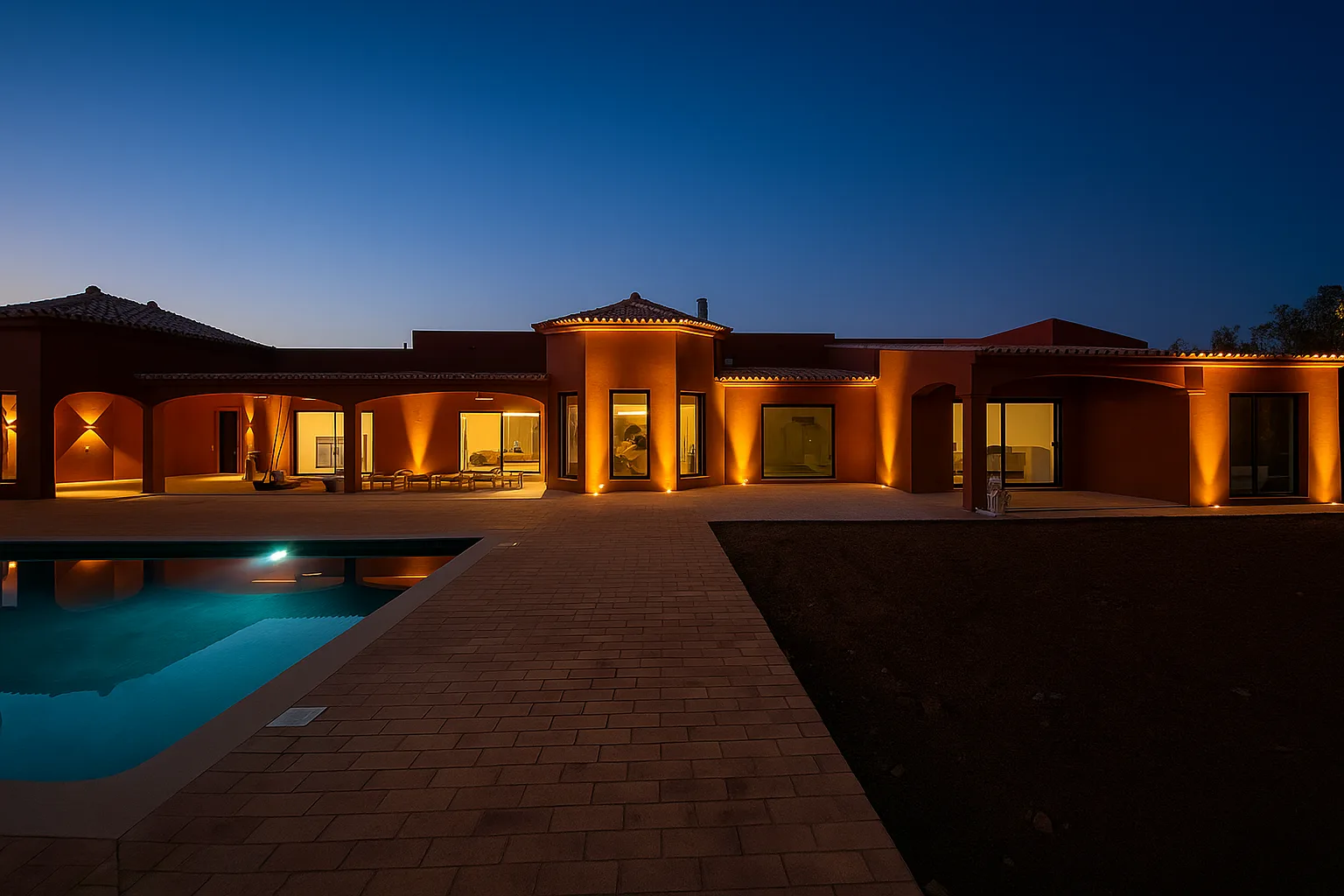
Building Rehabilitation in the Algarve
We bring older buildings and traditional Algarve houses back to life: structural consolidation, new roofs, damp treatment and fully modernised interiors, with all licensing handled by us.
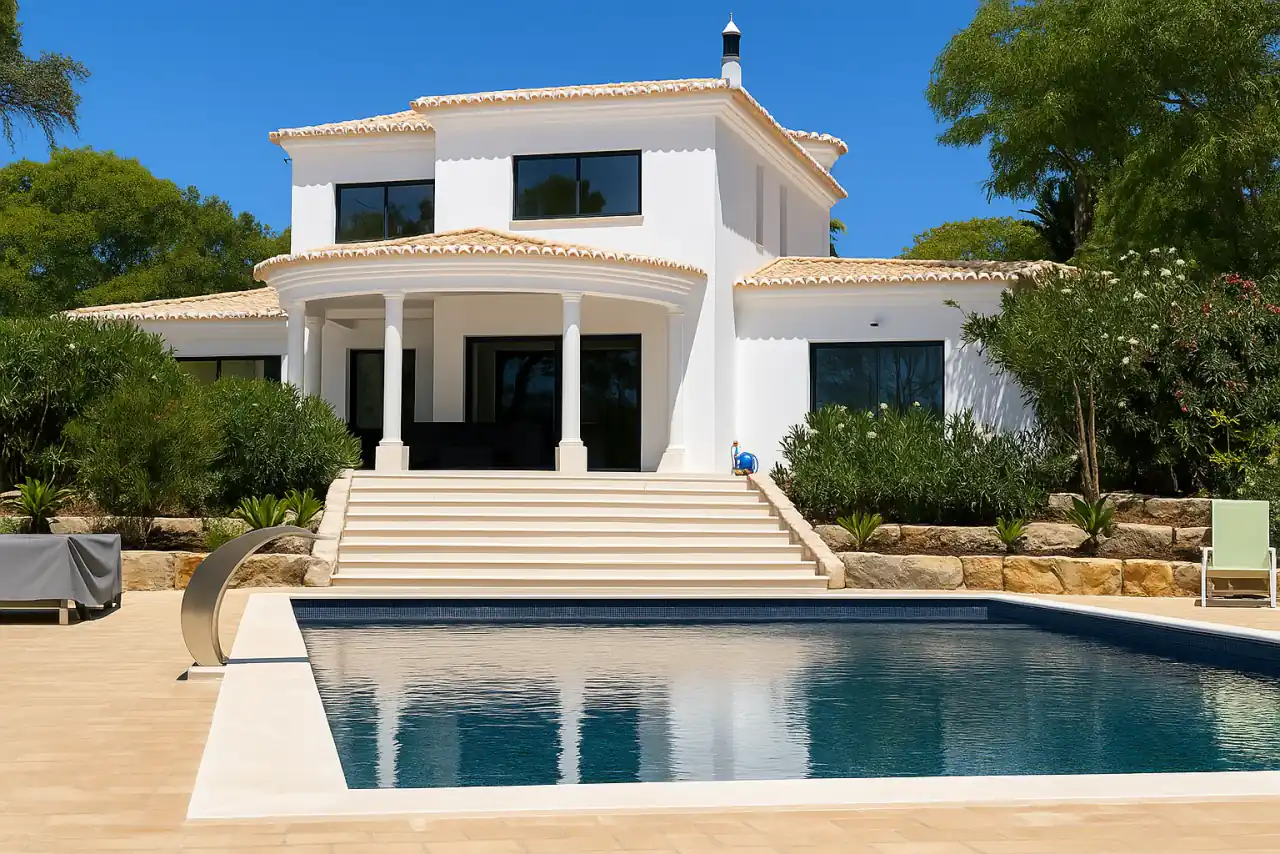
Structural Repair
Consolidation of foundations, walls and slabs in ageing or degraded buildings.
Roofs & Coverings
Roof replacement and restoration, including traditional tiles and thermal insulation.
Damp Treatment
Diagnosis and elimination of rising damp, water ingress and condensation problems.
Traditional House Restoration
Façades and period features preserved, interiors fully modernised.
What is building rehabilitation, and when does a house need it?
Rehabilitation is the work an older building needs when the problem lies in its structure, not just its finishes: stone masonry or taipa (rammed earth) walls that have cracked or lost their render, timber roofs that sag or leak, rotten floors, and damp rising at the base of the walls.
If the structure is sound and you only want to update kitchens, bathrooms or the layout, our renovation service is the better fit; if only the outer skin needs protecting, see painting and insulation. A rehabilitation usually includes:
- A structural survey of walls, floors and roof before any design
- Consolidation of stone and taipa walls, repointing and crack stitching
- A new roof structure, underlay and tiles, reusing sound original tiles
- Treatment of rising damp and drainage along the walls
- Replacement of rotten timber floors, beams and lintels
- New water, drainage and electrical installations
- Restoration of façades, platibanda parapets, chimneys and stone surrounds
How does a rehabilitation project work?
Old buildings hide things, so the process is designed to find them early and put them in writing.
Free site visit and a first assessment of the building’s condition
Survey of walls, roof, floors and damp, with inspection openings where needed
Free detailed written quote, separating confirmed work from items that depend on what opening up reveals
Licensing: together with the architect, we prepare and follow the process with the câmara municipal
Schedule with the phases of the work, before anything starts
Works: structure first, then services, then finishes
Handover, with licensing followed through to the utilisation licence where the job requires one
What are the phases of rehabilitating an old house?
Structure comes first: propping, wall consolidation, new lintels and the roof, so the building is stable and dry. Damp treatment and drainage follow, then new services, then lime renders and plasters, and only at the end floors, joinery and paint.
How long it takes depends heavily on what the survey finds, so we do not give a generic duration here.
How do you treat rising damp in old walls?
Traditional Algarve walls sit straight on the ground with no damp-proof course and draw water up by capillary action. Painting over the stains, or sealing the wall with cement render, traps that water and pushes the problem higher.
The lasting fix is to reduce the water reaching the wall (drainage, ground levels, gutters), let the wall dry out and finish it with breathable lime-based renders.
How much does it cost to rehabilitate an old building, and what affects the price?
As a guide, a deep rehabilitation of a traditional house typically runs between 800 and 1,800 euros per m², and where a given building lands depends on what the survey finds; the final figure is always set out in the written quote. The factors that matter most:
- How much of the structure and roof must be rebuilt rather than repaired
- The extent of damp and rotten timber
- Access for scaffolding and materials, often tight in historic centres
- Heritage conditions on the façade, windows and materials
- The level of interior finish and new services
- Unknowns that only appear once walls and floors are opened, for which we always recommend a contingency
Does rehabilitating an old house need a licence?
Usually yes, because most rehabilitation touches the structure, roof or façade, and that goes through the câmara municipal under the RJUE (Decreto-Lei 555/99). The 2024 Simplex Urbanístico reform (Decreto-Lei 10/2024) changed several procedures, so we confirm the right route for each building with the architect or the câmara.
In historic centres such as Silves, Faro or Lagos, and near listed buildings, there can be extra conditions on façades, roofs, windows and colours.
Which materials suit stone and taipa walls?
Old masonry has to breathe. We use lime-based mortars, renders and paints that are compatible with the original materials, and avoid cement renders and plastic paints on these walls. Taipa needs particular care: it is repaired with compatible earth or lime mixes and protected from water at its base and its top.
Where do we rehabilitate older buildings?
VRconstroi has worked on Algarve houses of every age since 2004, from its base in Armação de Pêra and under IMPIC alvará no. 98638-PAR. We rehabilitate buildings in the historic centres of Silves, Faro and Lagos, and in Loulé, Lagoa, Portimão and the villages around them.
Where we do this work
Cost varies widely with structural condition, but a deep rehabilitation of a traditional house typically runs between 800 and 1,800 euros per m². We assess the building before sending a quote, which always follows a site visit.
In most cases, yes, especially when structural or façade changes are involved. We handle the full licensing process with the local council and confirm the correct procedure for each building, since the 2024 Simplex Urbanístico reform changed several rules.
Rising damp in an old house is fixed by reducing the water reaching the base of the walls (drainage, ground levels, gutters), letting the wall dry and finishing it with breathable lime renders. Painting over it or applying cement render traps the water and makes it worse.
It depends on the PDM for the plot and on whether the existing building is registered. Some ruins can be rebuilt, often within the existing footprint; others, especially in RAN, REN or coastal protection zones, face tight limits. Confirm with an architect and the câmara municipal before buying.
In most cases yes, and it is worth it: they give the house thermal mass and character. They are consolidated with lime mortars or compatible earth mixes and protected from water at the base and top. The structural survey shows what can stay and what must be rebuilt.
It can improve a great deal: roof insulation, new windows, shading and dry walls make a big difference to comfort in summer and winter. The energy certificate, issued by an ADENE-qualified expert, records the starting point and the result of the rehabilitation.
An old roof needs rebuilding when the timber is rotten or deformed, leaks keep coming back, or there is no underlay or ventilation. In a rehabilitation we rebuild the roof structure, reuse sound original tiles and, where possible, insulate the roof.
- Renovating an Old House in the AlgarveA guide to renovating old Algarve houses: what to inspect before buying, damp and structural issues, costs, and when demolition makes more sense.
- Building Permits and Licensing in the AlgarveHow building licensing works with Algarve councils: the stages of the process, realistic timescales, documents required and where applications stall.
- IMPIC licence 98638-PAR (check)
- Tax no. (NIF) 515473111
- Since 2004
- Founder Veaceslav Rusu